
Understand Diocletian's Palace before choosing a tour
Diocletian's Palace combines an imperial residence with the structure of a Roman military camp. Built in the late third and early fourth centuries AD, it is now experienced through streets, buildings and spaces altered by later inhabitants. Think of the visit as a walk through an architectural ensemble, with optional interiors along the way. The public palace lanes are free; the cellars, cathedral and Temple of Jupiter are paid visits to consider separately.
The distinction helps when choosing a guided walk. A guide can explain how the complex fits together, but a walking tour is not a blanket entrance ticket. The historical complex of Split has been on the UNESCO World Heritage List since 1979, including later churches and palaces. Its interest extends beyond finding a single intact Roman room: look at the ways later uses occupy and reshape the ancient structure.
Our picks: Palace walks
Choose a local guide for a palace walk. Food and wine tastings are available only with the relevant option on one tour.
Hand-picked tours, booked through GetYourGuide and Viator. Prices are indicative starting prices in euros (as of October 2026). Tap a tour for live availability and the current price in your currency.
Palace and old town walk
- Local tour guide
- Walking tour
Food and wine tastings are included only with the selected option.
Check availability →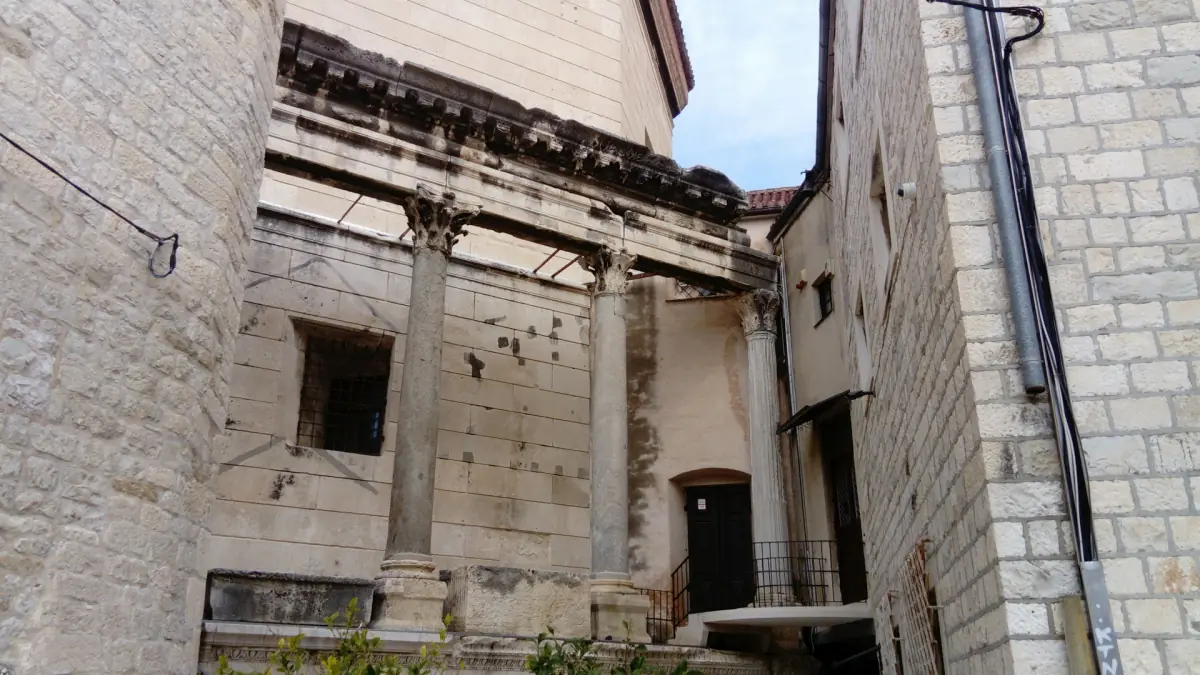
Palace walk with local guide
- Professional, local guide
- Walking tour in ENGLISH
The walk includes sightseeing of the palace.
Check availability →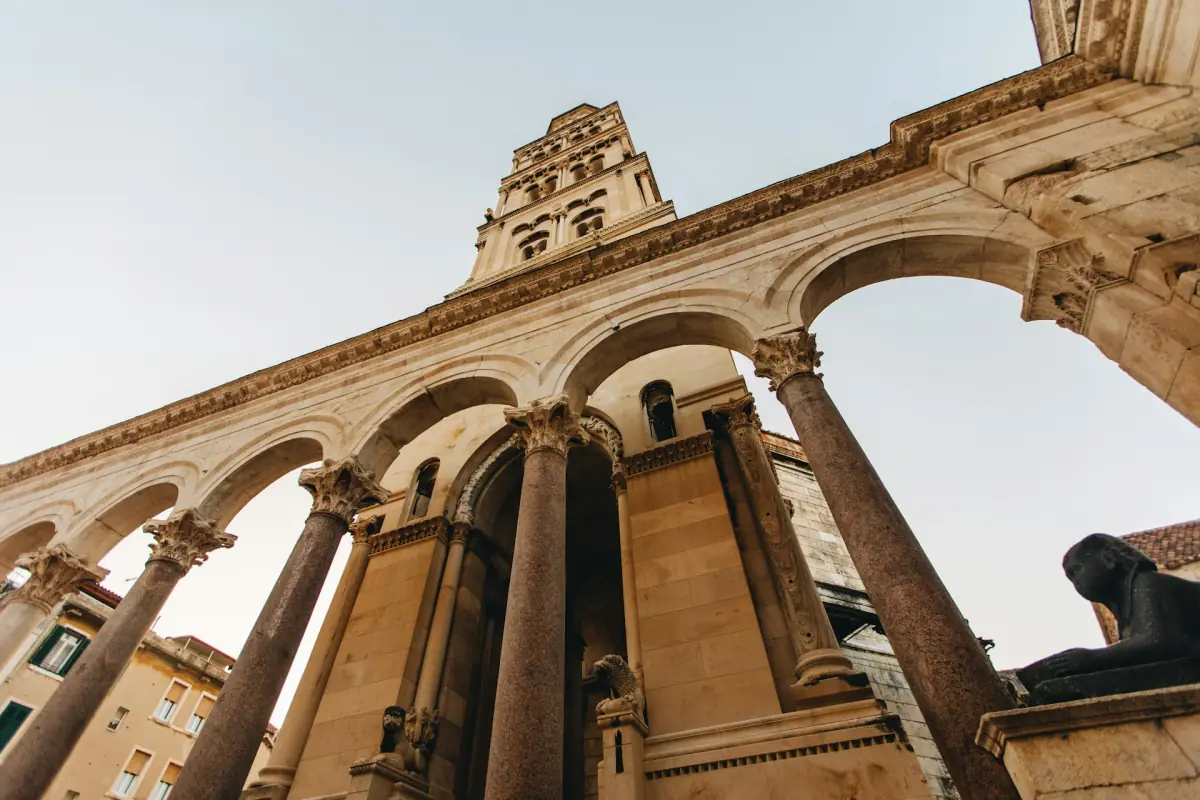
Guided palace walk
- Tour will be led by an educated guide with great knowledge of the locations around the Palace.
The included guide explains locations around the palace.
Check availability →Guided walks through the palace complex
Compare a local-guide palace walk with optional tastings, an English-language walk from the Golden Gate and a guided introduction starting at the Peristyle.
The palace layout
The complex measures approximately 215 by 180 metres. The imperial rooms occupied the southern part, while guards, servants and storage functions belonged in the north. That division gives more meaning to the route than treating every passage as an isolated sight. Begin by locating the sea-facing side and the central ceremonial space, then connect the gates to the surrounding city. For the wider route through squares and markets, use the old town walking guide.
Four gates and the surrounding streets
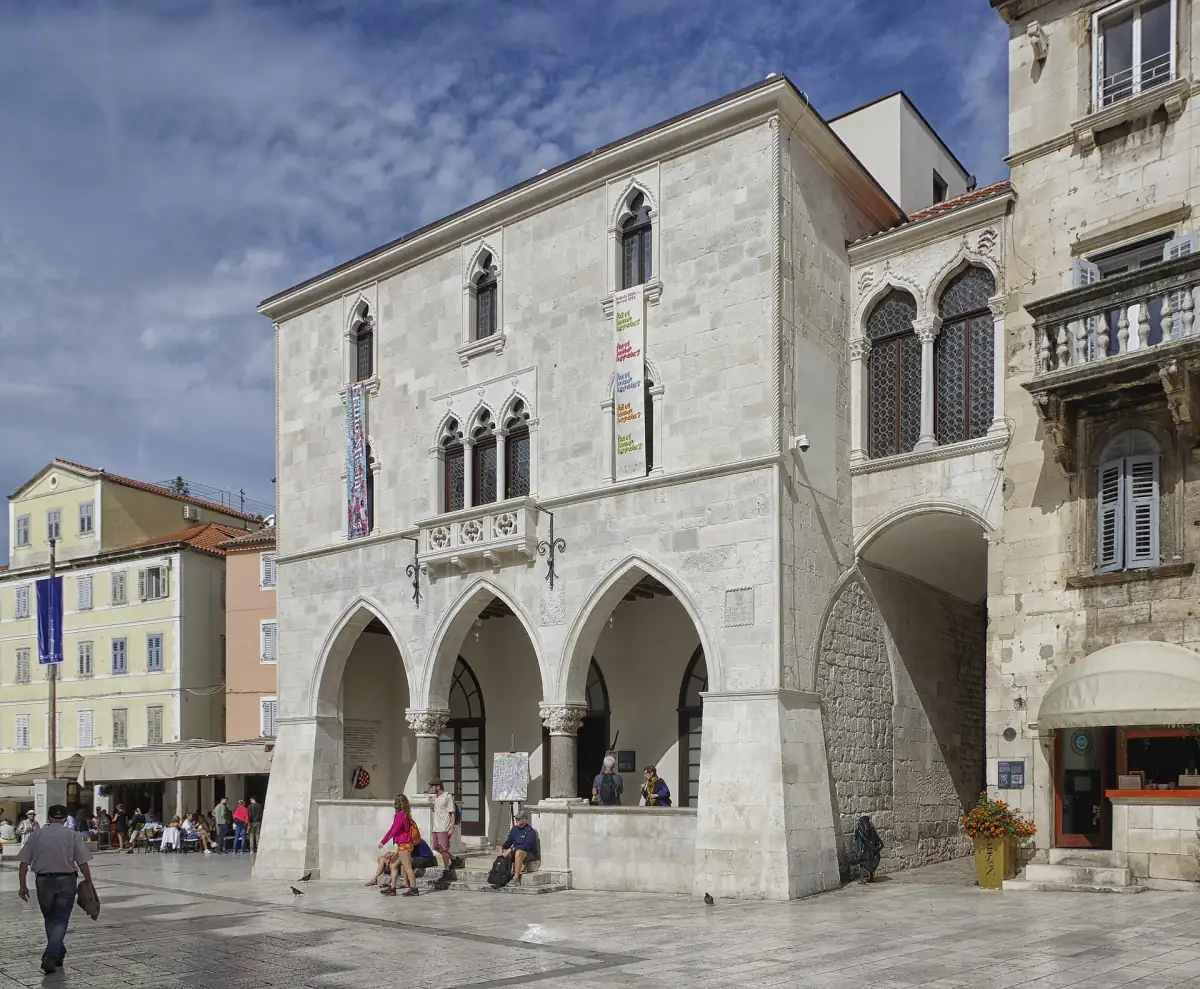
There are four gates, one on each side of the complex. The Silver Gate is beside the Pazar market. The Decumanus runs west toward the Iron Gate and Pjaca, making it a useful link between the palace and the rest of the old town. The English-language guided walk starts at the Golden Gate, while the southern entrance connects with the Riva. Choose your meeting point carefully rather than navigating only to the general palace area.
The Peristyle
The Peristyle was the ceremonial central square. Pause here to understand the relationship between the open space and the buildings around it before moving indoors. It also provides a practical choice of tour start: the Peristyle-based walk meets on the elevated level and includes an educated guide. That differs from the Golden Gate walk, even though both introduce the same palace complex. Leave space to return independently after the commentary rather than trying to photograph every detail while moving with a group.
Cellars and admission in 2026
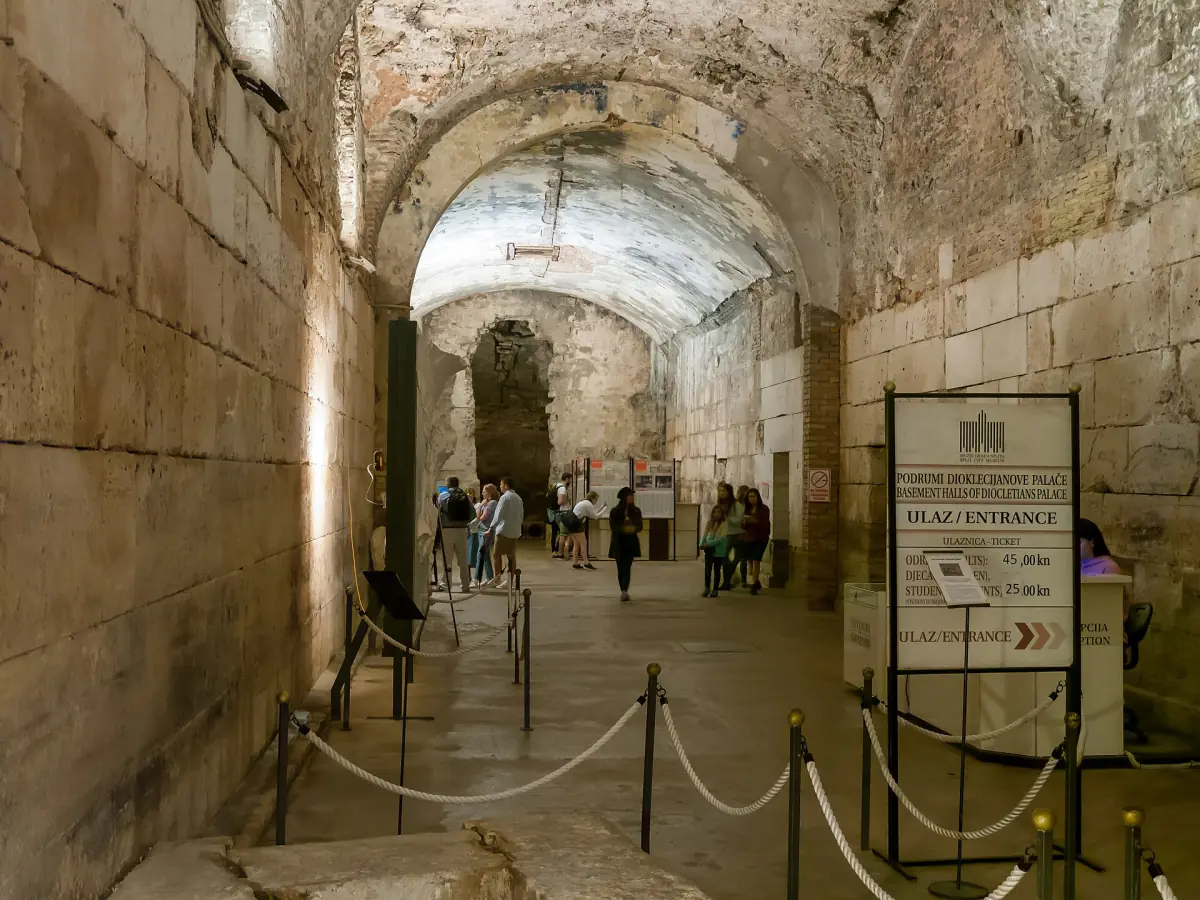
The cellars supported the imperial rooms above and also served for storage. They help explain the structure overhead, rather than representing the entire palace underground. The city museum's 2026 tariff lists regular cellar admission at 10 EUR. Its displayed opening span is 08:30 to 20:00, with ticket sales ending 30 minutes before closing; check the opening arrangements for your date, especially in winter. Plan a paid cellar visit separately from simply walking through the public palace area.
The palace cellars were also a Game of Thrones filming location. That gives them a second context, but architecture and screen locations need not be the same visit. Use the filming-location tour guide if that is your main interest. A cellar passage in a route description should be distinguished from admission to the paid halls when comparing what you want to see.
Cathedral and bell tower
The Cathedral of Saint Domnius occupies Diocletian's former mausoleum, converted into a cathedral in the seventh century. The building is octagonal outside and circular within, and it remains a church used for worship. The wooden doors by Andrija Buvina are another reason to look beyond the Roman phase. Keep the tower as a separate decision in your itinerary: its stairs are a different physical undertaking from the public street walk. For the church visit, plan clothing that covers shoulders and knees.
The Temple of Jupiter
Include the Temple of Jupiter in your decision about paid interiors rather than assuming it is covered by a city walk. Its relationship with the cathedral's baptistery is part of the later reuse of the complex. A useful route is to understand the public spaces first, then choose the interiors that answer your interests. The history page develops the change from imperial residence to a later urban and religious ensemble.
Architecture and choosing a walking format
The 1.5-hour local-guide walk includes the guide and walking tour, with wine or food tastings only if that option is selected. The 90-minute English-language walk includes a professional local guide and palace sightseeing. The Peristyle-based 90-minute walk includes an educated guide. Choose by starting point and interpretive interest, keeping paid admissions as a separate budget decision. The tour overview compares these city experiences with longer days out.
Questions about the palace visit
Can I explore without paying an entrance fee?
You can walk the public palace lanes freely. Paid interiors such as the cellars, cathedral and Temple of Jupiter have separate admission arrangements.
How much is the cellar entrance?
Regular admission is 10 EUR in the city museum's 2026 tariff. This is the cellar ticket, separate from a guide's walking-tour price.
Is the cathedral a Roman building?
It occupies the former imperial mausoleum, converted into a cathedral in the seventh century. The later religious use is part of the story of the palace.