
Split history begins with a changing palace
Split history can be approached through the relationship between the Roman palace and the later city. The complex was built in the late third and early fourth centuries AD, combining an imperial residence with elements of a Roman military camp. Its later buildings and altered walls make the present centre more than a preserved Roman plan. Reading those changes is a useful way to explore without trying to assign every street to a single period.
Start with the basic distinction between the original building programme and subsequent use. The southern part held imperial rooms; guards, servants and storage occupied the northern part. That contrast helps explain the organisation of the complex, while later churches and palaces show why its heritage extends beyond Roman masonry alone. The palace guide develops the architectural layout and separates the public streets from individual interiors.
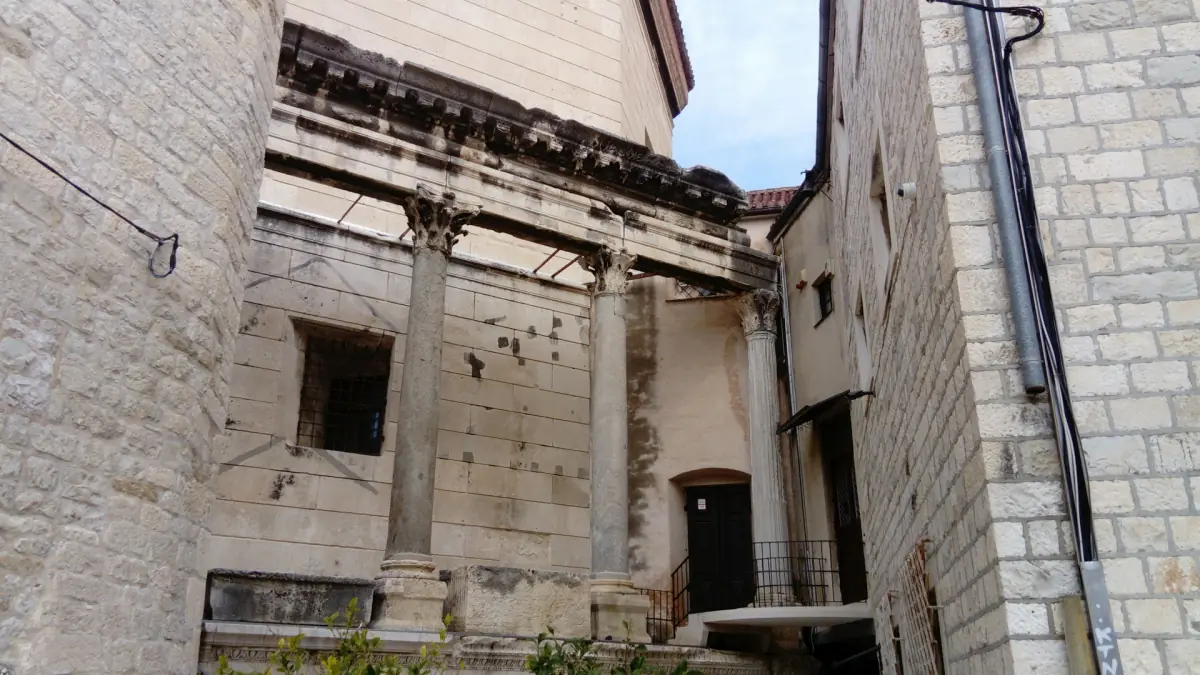
A Roman framework for the city
The palace measures approximately 215 by 180 metres and has four gates, one on each side. These are useful reference points when reading the old centre. They give the site a framework, but later inhabitants changed both structures and walls. Rather than looking for an untouched imperial residence at every turn, look for the relationship between the large original outline and the smaller spaces that now occupy it.
Peristyle and substructures
The Peristyle served as the ceremonial central space. Below the imperial rooms, the substructures supported the buildings above and also provided storage. Together they explain two different functions of the same complex: presentation and support. Viewing both levels can make the plan easier to understand, but the palace as a whole is not underground. A walk through the public streets and a visit to the paid substructures are distinct parts of an outing.
Our picks: A history walk
A history guide and 3D reconstructions bring context to the city.
Hand-picked tours, booked through Viator. Prices are indicative starting prices in euros (as of October 2026). Tap a tour for live availability and the current price in your currency.
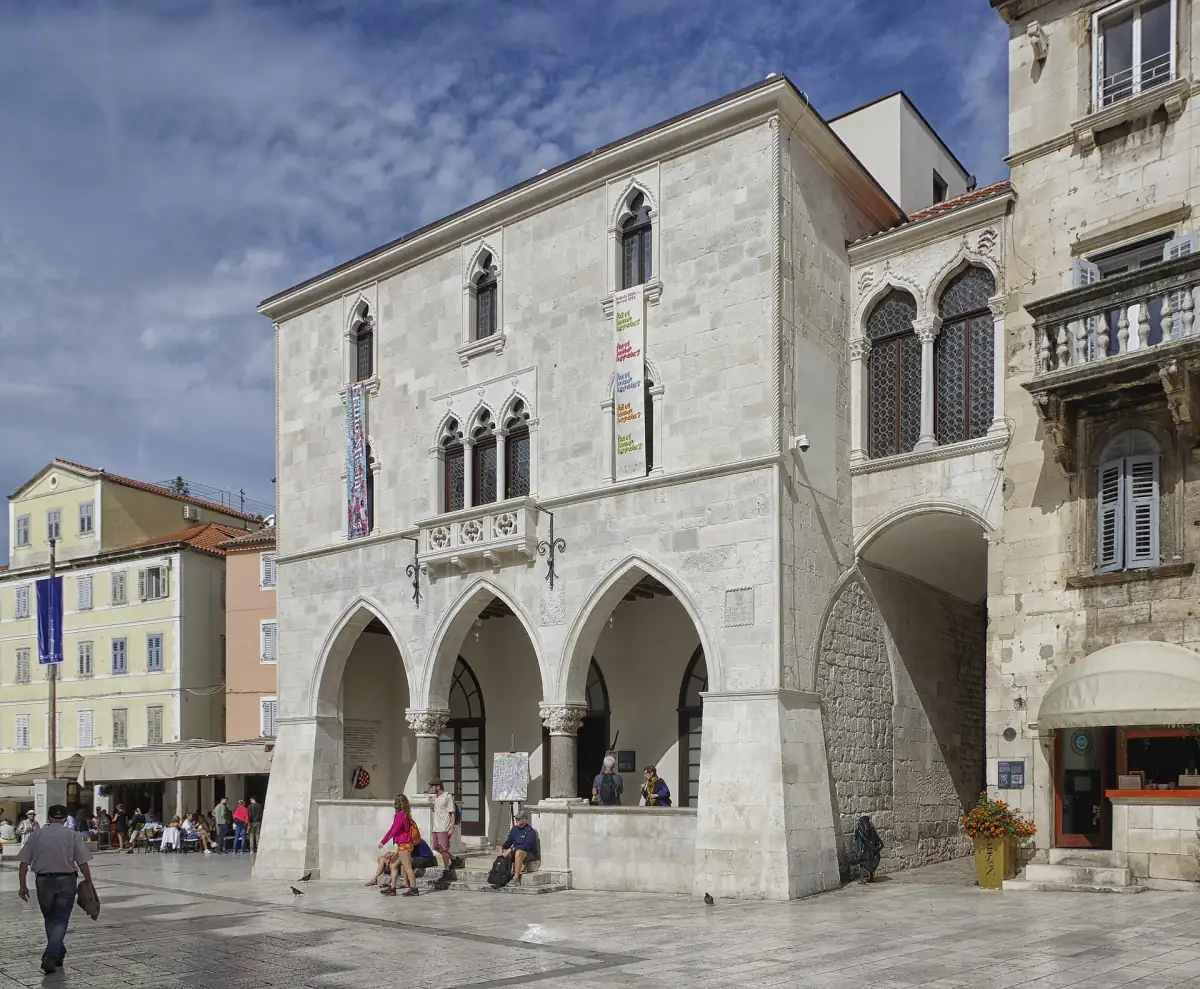
Walk through the city's historical layers
This historical walk includes a guide with a master's degree in history and teaching experience, an audio headset and demonstrations using 3D reconstructions. The meeting point is the Brass Gate by the Riva.
From imperial mausoleum to cathedral
The Cathedral of Saint Domnius occupies Diocletian's former mausoleum. Its conversion into a cathedral in the seventh century gives a clear example of a structure acquiring a different role. The building remains a place of worship. That continuity of use is part of the visit: approach it as an active church as well as a surviving architectural form, and allow the interior its own place in the day.
Outside, the former mausoleum is octagonal; inside, the space is round, with an ambulatory of 24 columns. The wooden doors by Andrija Buvina have 14 Gospel panels on each leaf. These details offer things to examine closely instead of treating the cathedral only as a stop beside the bell tower. For the tower, remember that access involves stairs when deciding which parts of the complex suit the visit.
The UNESCO ensemble includes later buildings
The Historical Complex of Split with the Palace of Diocletian entered the UNESCO World Heritage List in 1979. The protected ensemble includes later churches and palaces alongside the Roman remains. This matters when walking through the centre: a later façade is part of the historical place, rather than something to ignore while searching only for antiquity. The changing city is central to understanding what survives.
For an independent route, use the Silver Gate near Pazar and follow the Decumanus west towards the Iron Gate and Pjaca. The route provides a practical way to connect the ancient framework with the surrounding city. Continue with the old town guide for orientation through the squares and streets, or use the sightseeing overview to add the Riva and other stops without turning the history visit into a checklist.
Choosing a historical visit
The historical walking option lasts 100 to 110 minutes. Its 3D demonstrations can help relate surviving buildings to earlier forms, while the headset connects participants to the guide's audio system. Meet at the Brass Gate, the southern entrance from the waterfront into the palace substructures. Keep a guided explanation and admission to particular rooms separate in the plan; the listed inclusions focus on the guide, audio equipment and reconstructions.
Questions about Split's past
When was Diocletian's Palace built?
The palace was built in the late third and early fourth centuries AD. It combined an imperial residence with features of a Roman military camp, and its structures were subsequently altered by later inhabitants.
Why is the cathedral important to the story?
It occupies Diocletian's former mausoleum, converted into a cathedral in the seventh century. The change of function is a particularly clear example of how the city reused the Roman complex.
Does World Heritage status cover only Roman remains?
The ensemble listed in 1979 also includes later churches and palaces. Looking at these layers together gives a fuller reading of the centre than concentrating solely on its original Roman structures.